Unlocking Content Potential: How to Use Invisible Characters to bypass AI filters
In the rapidly evolving digital landscape, AI content filters have become ubiquitous, designed to maintain platform integrity, filter spam, and enforce community guidelines. While these filters are crucial, they can sometimes overreach, flagging legitimate content, unique creative expressions, or innovative marketing copy. If you’ve ever felt the frustration of your carefully crafted message being stifled by an automated system, you’re not alone.
This comprehensive guide dives deep into a powerful, yet often overlooked, technical SEO strategy: using invisible characters to AI bypass these stringent filters. We’ll specifically focus on how Zero-Width Spaces (U+200B) can cleverly disrupt the underlying mechanics of Large Language Models (LLMs) and their tokenization processes, opening up new avenues for your content to reach its intended audience.
What Are AI Content Filters and Why Do They Matter?
AI content filters are sophisticated algorithms employed by platforms (social media, forums, email providers, content management systems) to automatically detect and prevent the publication or distribution of content deemed undesirable. This can range from hate speech and spam to copyrighted material, misinformation, or even excessive keyword stuffing. They work by analyzing text, images, and videos for patterns, keywords, sentiment, and other indicators.
For content creators, marketers, and technical SEO specialists, understanding how to navigate these filters is paramount. Bypassing them isn’t about promoting harmful content; it’s often about ensuring your message – which might be satirical, unconventional, or simply using words that trigger false positives – isn’t unjustly suppressed. It’s about maintaining creative freedom and effective communication in an automated world.
The Hidden Weapon: Invisible Characters for AI Bypass
Imagine a character that exists within your text, takes up space (albeit zero visual space), but is completely imperceptible to the human eye. These are invisible characters, also known as non-printing characters. While they don’t render visually, they are very much ‘present’ in the digital stream, influencing how machines interpret your text.
There are several types of invisible characters, but for the purpose of bypassing AI content filters, one stands out for its effectiveness and elegant simplicity: the Zero-Width Space (U+200B).
Deep Dive: Zero-Width Space (U+200B) and LLM Tokenization
To understand why the Zero-Width Space is so effective, we first need a basic grasp of how Large Language Models (LLMs) process text. When an LLM like GPT or a filter’s underlying model receives text, it doesn’t process it as a continuous string of letters. Instead, it performs a crucial step called tokenization.
Tokenization is the process of breaking down raw text into smaller, meaningful units called “tokens.” These tokens can be words, parts of words (subwords), punctuation marks, or even individual characters. For example, the phrase “Hello, world!” might be tokenized as [“Hello”, “,”, “world”, “!”]. This process is fundamental because LLMs operate on these numerical representations of tokens, not the raw text itself.
Here’s where the Zero-Width Space (U+200B) becomes a game-changer. The U+200B is a Unicode character intended for use in situations where a line break might be desirable within a word, without visually altering the word itself. Critically, while it’s invisible to us, it’s a distinct character that exists in the digital stream.
When you insert a Zero-Width Space into a word, for example, changing “keyword” to “keyword,” you create a subtle disruption. An LLM’s tokenizer, instead of recognizing “keyword” as a single, known token, might now see “key” and “word” as two separate tokens, or it might create an entirely new, less common token like “keyword” which doesn’t match its database of flagged terms. This breaks the expected token sequence.
By altering the tokenization, you effectively change the input that the AI content filter’s model receives. If the filter is looking for a specific token or sequence of tokens that represent a flagged term, the presence of a Zero-Width Space can make that term undetectable, allowing your content to pass through without visual alteration to the human reader. It’s an elegant solution for an invisible characters AI bypass.
Practical Applications: How to Deploy Invisible Characters
The primary application of Zero-Width Spaces is to subtly alter specific words or phrases that are known to trigger AI content filters. Here are some scenarios:
- Bypassing Keyword Flags: If a specific word (e.g., a competitor’s brand name, a sensitive term, or a banned product name) is consistently filtered, insert a U+200B within that word. For example, instead of “cryptocurrency,” you might use “cryptocurrency.”
- Creative Expression & Satire: For content that uses potentially controversial language in a satirical or artistic context, U+200B can help prevent automated censorship.
- Avoiding False Positives: Sometimes, innocent phrases accidentally contain combinations of letters that trigger filters. Invisible characters can break these false positive triggers.
- URL & Link Camouflage (Limited Use): While not foolproof, inserting U+200B in URLs can sometimes prevent direct pattern matching by simpler filters. Be cautious as this can break link functionality.
Step-by-Step Guide to Using Zero-Width Spaces for AI Bypass
Implementing Zero-Width Spaces is straightforward:
Method 1: Manual Insertion (Copy-Paste)
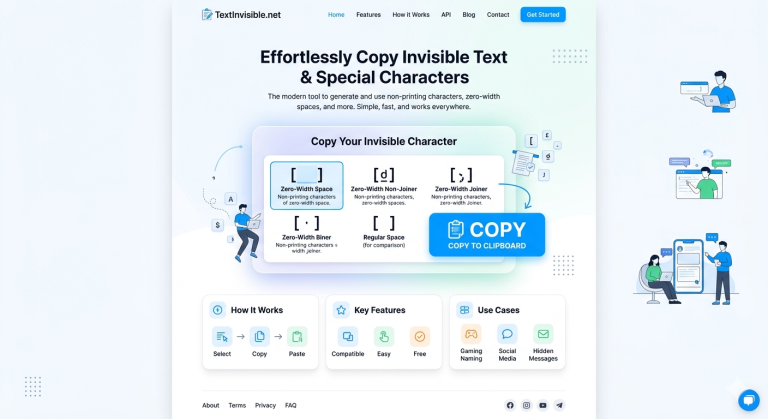
This is the simplest way for most users. You can copy the invisible character and paste it directly into your text editor or content field.
Copying the Zero-Width Space for Your Use
To make it easy for you to experiment, here’s the zero-width space character itself, which you can copy directly from the grey box below:
(Note: The button above demonstrates how a JavaScript-enabled “copy” button would work in a live blog post. For now, you can manually select the empty space within the grey box above and copy it.)
Alternatively, you can just copy the character from within a word, like from this example: word. Just select the invisible character between ‘w’ and ‘o’ and copy it.
When implementing, simply paste this invisible character into your text where you want to disrupt tokenization. For instance, to modify “blacklist,” you might type “black” then paste the invisible character, then type “list”: blacklist.
Method 2: Programmatic Insertion (for developers)
If you’re generating content dynamically, you can insert the Zero-Width Space programmatically. In most programming languages, it’s represented as \u200b. For example, in Python: "keyword".replace("key", "key\u200b").
Considerations and Best Practices for Invisible Characters AI Bypass
While an effective technique, using invisible characters requires careful consideration:
- Ethical Use: This technique should be used responsibly. Avoid employing it for malicious purposes, spam, or to circumvent legitimate safety measures. Its power lies in its subtlety; abuse will lead to increased scrutiny from platforms.
- Detection Evolution: AI filters are constantly evolving. What works today might be detectable tomorrow. Platforms may develop methods to identify and filter content containing excessive or strategically placed invisible characters.
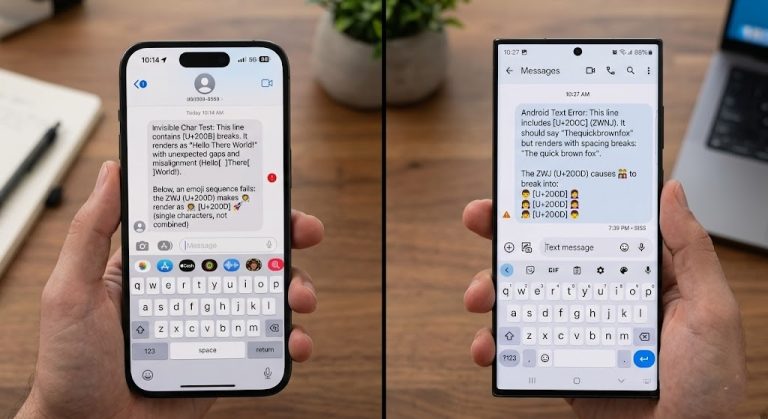
- Readability and Accessibility: While invisible to the eye, excessive use could potentially impact screen readers or other accessibility tools if not properly handled, though in most cases, a few strategic insertions have minimal impact.
- SEO Impact: For general SEO, keyword stuffing with invisible characters is generally a bad idea and could lead to penalties. The goal here is specifically to bypass content filters, not to manipulate search engine rankings.
- Testing is Key: Always test your modified content on the target platform to ensure it passes the filter as intended and renders correctly for users.
The Future of AI Filtering and Invisible Characters
The cat-and-mouse game between content creators and AI content filters is ongoing. As techniques like invisible characters AI bypass become more widely known, AI models will likely adapt to detect and neutralize them. Future iterations of filters might analyze character encodings more deeply, look for suspicious patterns of non-printing characters, or even perform visual rendering simulations to detect discrepancies.
However, understanding the foundational mechanisms like tokenization provides valuable insight. It empowers you to think critically about how AI processes information and to adapt your strategies accordingly. Staying informed about the latest developments in NLP and content moderation will be crucial for any technical SEO specialist or content creator looking to navigate this complex terrain.
Empowering Your Content in the AI Era
The ability to effectively communicate online without unnecessary friction is more important than ever. By understanding and strategically utilizing techniques like the invisible characters AI bypass, particularly the Zero-Width Space (U+200B) and its impact on LLM tokenization, you can regain control over your content’s journey.
Remember, this isn’t about deception for its own sake, but about ensuring your legitimate, valuable, and creative content can reach its audience, free from the sometimes heavy-handed hand of automated moderation. Experiment responsibly, stay informed, and continue to unlock the full potential of your digital presence.