Why Does My Invisible Character Show as a Box? The Frustrating Box Explained (Fixed)
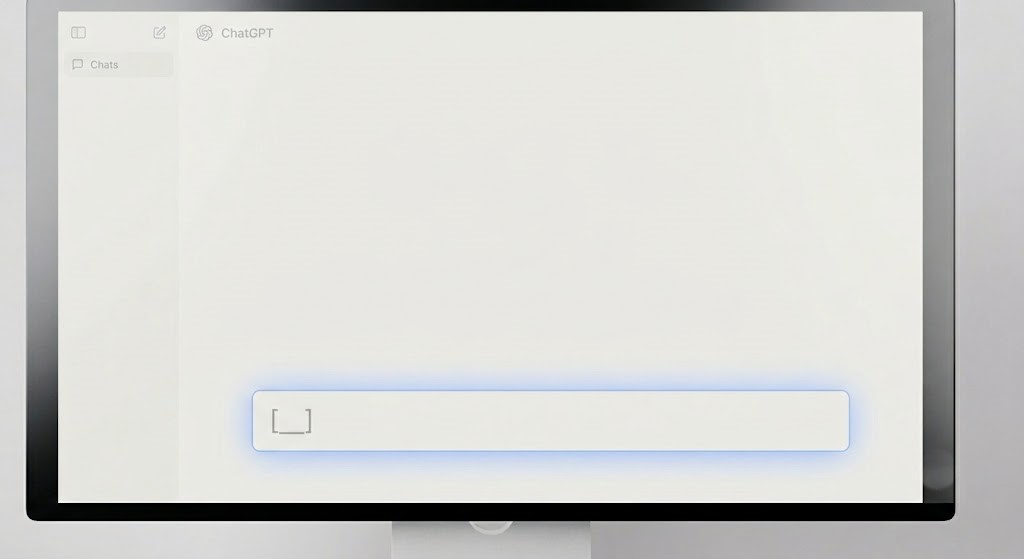
Ever meticulously crafted a piece of content, only to find a mysterious, unwelcome box appearing where you intended absolute nothingness? You’re trying to use an “invisible” character—perhaps to control line breaks, nudge spacing ever so slightly, or for some technical formatting—but instead, you’re greeted with a hollow square, often called a “tofu” character or a “missing glyph box.” This common annoyance can be incredibly frustrating, especially when it disrupts your carefully designed layout or simply makes your text look unprofessional.
If you’re wondering, “Why does my **invisible character shows as box**?” you’ve come to the right place. This isn’t a random glitch; it’s a fascinating interplay between character encoding, fonts, and how your computer or browser renders text. In this comprehensive guide, we’ll demystify the “box” phenomenon by diving deep into font rendering and fallback glyphs, and then provide you with a bulletproof solution to banish those pesky squares for good.
The Mystery of the Missing Glyph: Why an Invisible Character Shows as a Box
That square box isn’t an error message; it’s actually the system’s way of telling you, “I know there’s a character here, but I don’t know how to draw it.” To understand why this happens, we need to peel back the layers of how digital text works.
Understanding Unicode and Characters
At its core, all text on computers is represented by numbers. Unicode is the universal standard for encoding characters, assigning a unique number (a “code point”) to virtually every character in every writing system in the world. From the Latin alphabet to Cyrillic, Arabic, Chinese, and even emojis, each has its own distinct Unicode code point (e.g., U+0041 for ‘A’, U+200B for Zero Width Space).
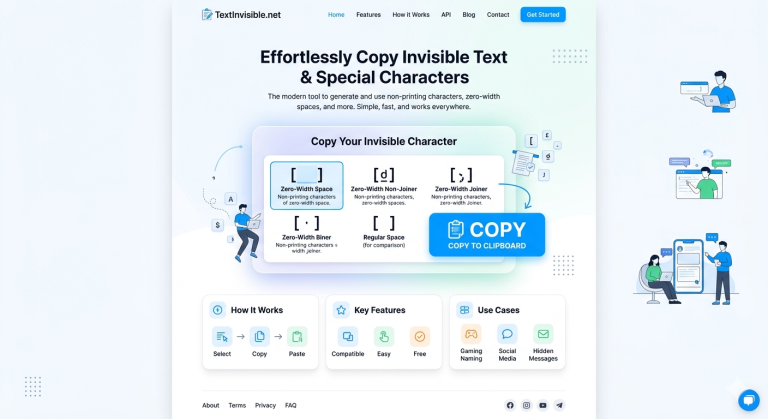
An “invisible” character, such as a Zero Width Space (U+200B) or a Zero Width Non-Joiner (U+200C), is still a valid Unicode character with its own code point. Its “invisibility” is merely its intended visual representation: a character that takes up no horizontal space.
The Role of Fonts and Glyphs
While Unicode defines *what* a character is, fonts define *how* that character looks. A font file (like Arial, Times New Roman, or Open Sans) contains a collection of graphical representations called “glyphs.” Each glyph is essentially a tiny drawing for a specific Unicode code point. For example, the Arial font file contains a glyph for ‘A’, a glyph for ‘B’, and so on.
Here’s the crucial part: no single font contains glyphs for *every single* Unicode code point. Fonts are designed for specific purposes and languages, and they only include the glyphs for the characters they are expected to render. Common fonts typically cover Latin characters, numbers, basic punctuation, and a selection of frequently used symbols. Less common or highly specialized characters are often omitted.
Font Rendering and Fallback Mechanisms
When your browser, text editor, or operating system displays text, it performs a process called font rendering:
1. It identifies the Unicode code point of each character in the text.
2. It then looks for the corresponding glyph in the primary font specified (e.g., in your CSS `font-family` stack).
3. If the glyph for a particular character is found in the primary font, it’s drawn on screen.
4. **If the glyph is *not* found in the primary font**, the system doesn’t just give up. It initiates a “fallback” mechanism. It tries to find the missing glyph in the next font listed in the `font-family` stack, then the next, and so on. If it exhausts all specified fonts, it then turns to system-wide default fallback fonts.
5. **If, after trying all available fallback fonts, *no* suitable glyph is found for that Unicode code point**, the system has no drawing instructions. At this point, it renders the generic “missing glyph box.” This box is a visual placeholder, communicating that the character exists but cannot be displayed. This is precisely why your **invisible character shows as box**.
So, when you see that box, it means the specific “invisible” character you used wasn’t supported by *any* of the fonts your system tried to use to display it.
Common Culprits: When Invisible Characters Go Wrong
Several “invisible” Unicode characters are commonly used but can lead to the “box” problem because their glyphs aren’t universally present in all fonts. These often include:
* **Zero Width Space (U+200B):** Intended to allow a line break without visible space.
* **Zero Width Non-Joiner (U+200C) / Zero Width Joiner (U+200D):** Used in complex scripts to control character joining behavior.
* **Soft Hyphen (U+00AD):** A hint for hyphenation at line breaks.
* **Narrow No-Break Space (U+202F):** A non-breaking space narrower than a standard non-breaking space.
While these characters have specific semantic meanings, many widely used fonts simply don’t include glyphs for them. They’re often seen as more specialized Unicode characters, and thus, they are the frequent victims of the missing glyph box.
The Solution: Choosing a Widely Supported Invisible Character
The good news is that there’s a remarkably effective way to prevent your **invisible character shows as box**. The trick is to use an invisible character that, despite its lack of visual footprint, is part of a large, fundamental Unicode block that virtually all modern fonts are designed to support.
Introducing the Hangul Filler (U+3164)
Meet your new best friend for invisible spacing: **U+3164**, also known as the **Hangul Filler** or **Hangul Choseong Ieung**.
Why U+3164? It might seem counter-intuitive to use a character from the Korean Hangul script for an invisible placeholder. The reason is simple and brilliant: the Hangul Unicode block is massive and incredibly well-supported. Modern fonts, to be considered robust, almost always include comprehensive support for East Asian scripts like Hangul.
The U+3164 character itself is a “filler” character within the Hangul Jamo block, designed to occupy a position in composite Hangul syllables when a component is missing. Crucially, its visual representation is literally nothing—it’s a truly invisible character that carries no semantic meaning outside its very specific role in Hangul composition, making it ideal for our purpose. Because it belongs to such a broadly supported block, fonts almost universally have a glyph for it, even if that glyph is just “nothing.” This means it almost *never* falls back to the missing glyph box.
How to Implement U+3164
Using U+3164 is straightforward, regardless of your context:
* **In HTML:** Use the numeric character entity `ㅤ` (hexadecimal) or `ㅤ` (decimal).
Some textㅤwith an invisible space here.* **In JavaScript/Programming Languages:** Use the Unicode escape sequence `\u3164`.
const text = "Some text\u3164with an invisible space here.";* **Direct Copy-Paste:** You can often copy the character directly from a reliable source and paste it into your text editor, but be mindful of your editor’s encoding settings. It’s generally safer to use the entity or escape sequence if you’re dealing with code.
When you deploy U+3164, you’ll find that it behaves exactly as an invisible character should: it takes up no visual space, yet it is recognized by the system, preventing the dreaded “box.”
Beyond the Box: Best Practices for Invisible Characters
While U+3164 is an excellent solution for the “box” problem, it’s essential to use invisible characters thoughtfully.
Semantic Correctness Matters
Always ask yourself if an invisible character is the best tool for the job. If you’re trying to achieve visual spacing or layout control, CSS properties like `margin`, `padding`, `letter-spacing`, or `word-spacing` are almost always the semantically correct and more robust solution. Invisible characters should be reserved for scenarios where you genuinely need a character to exist at a specific point in the text flow, but without any visual footprint (e.g., specific line break control in complex text, or for unique text processing needs).
Testing is Key
Even with U+3164, it’s always good practice to test your content across different browsers, operating systems, and devices. While U+3164 has exceptional support, the web is a diverse place, and vigilance ensures your content always looks as intended.
Consider Alternatives
For simple non-breaking spaces, ` ` (the standard non-breaking space) remains a perfectly valid and universally supported HTML entity. If your goal is to prevent two words from breaking, ` ` is often a clearer and more semantically appropriate choice than an entirely invisible character.
Conclusion
The mystery of “why does my **invisible character shows as box**?” is no longer a mystery. It boils down to the fundamental process of font rendering and the fallback mechanisms employed when a font lacks the necessary glyph. By understanding that a missing glyph box simply means “no drawing instructions found,” you gain the power to fix it.
Your secret weapon? The robust and universally supported **Hangul Filler (U+3164)**. By opting for this unassuming character, you leverage the comprehensive nature of modern font support for major Unicode blocks, ensuring your invisible characters truly remain invisible, without any frustrating boxes spoiling your design. Go forth and banish the boxes, knowing you have the technical understanding and the right tool to achieve perfectly clean, invisible spacing!